UNDERGROUND TUNNEL
Explore the underground tunnel.
Step beneath the surface and discover one of the unique attractions at kitara tourism square. Measuring approximately 121 meters long, with an average height of 4 feet and width of about 3feet, the underground tunnel offers visitors an unforgettable historical and sensory experience.
The exact age of the tunnel remains unknown because no confirmed artifacts or written records have been found inside to establish when it was constructed. It’s history therefore continues to be preserved through local knowledge and interpretation. As you journey through the narrow passage, you can experience the darkness and confined environment while learning about the possible traditional uses of underground passages.
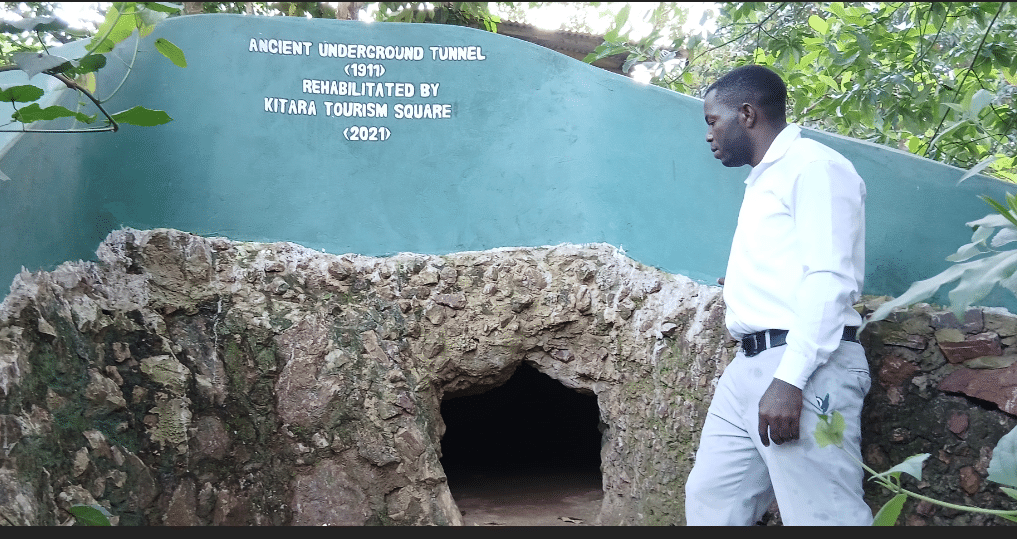
Torches or any lighting are not permitted during the experience so that visitors can appreciate the natural darkness of the tunnel and participate in a sensory- awareness experience. Visitors are accompanied and guided through the experience, making the tunnel an educational attraction as well as an adventure.
Within the underground tunnel are specially formed sitting areas traditionally associated with omukama chwa II kabalega, the legendary king of Bunyoro Kitara. According to local historical accounts, these spaces provided kabalega with places to rest while using the underground passage and offered a concealed environment where he could stay away from his enemies.
The seats are traditionally remembered as places where kabalega could hold important discussions and meetings with trusted members of his team away from visitors a glimpse into how underground spaces could serve not only as passages, but also as places of refuge, rest and strategic communication.
Today, the seats remain an important part of the tunnel’s cultural interpretation, connecting visitors with the history and other traditions surrounding kabalega resistance and the wider heritage of Bunyoro Kitara.
The underground tunnel at kitara tourism square is a unique heritage attraction that preserves the history and traditions associated with omukama kabalega. Its resting and meeting point offers visitors a glimpse into the ways the tunnel provided refuge, rest and privacy during the time of conflicts