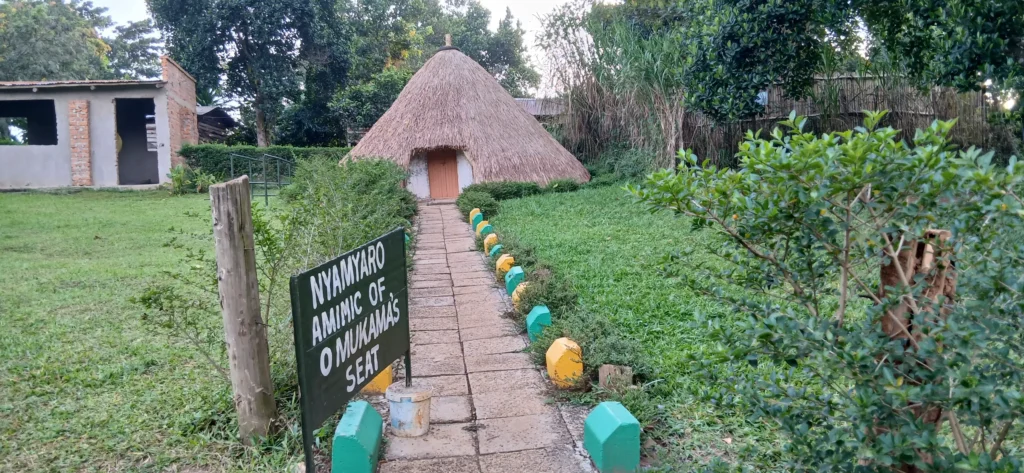
NYAMYERO AMIMIC-THE OMUKAMA’S SEAT
Nyamyearo Amimic at kitara tourism square provides visitors with an insight into the traditional royal setting of the omukama of Bunyoro and the customs symbols and object associated with the royal court. This site illustrates how the omukama’s position was surrounded by dignity, protocol, protection and carefully observed traditions.
At the center of the setting is the omukama’s special seat, reserved exclusively for the king. The omukama was highly respected figure and was not expected to speak casually or indiscriminately with everyone.
Communication with him followed established royal protocols, reflecting his position and authority.
Visitors and other members of the royal court had designated sitting arrangements, with visitors traditionally seated on back cloth rather than occupying the king’s special seat.
The display also features traditional drums, each associated with particular meaning, sounds and to functions. Drums played an important role in royal community life, including communication. Ceremonies and announcement of significant occasions. Their different sounds help convey particular messages within the traditional setting.
A collection of tradition seat further demonstrate the importance of protections within the royal court. Spears served as symbols of security, authority and defiance, representing the responsibility to protect the omukama, the royal household and the kingdom.
Traditional baskets are also displayed as part of the royal setting. After harvesting people could present food and other produce to the omukama in baskets as a sign of respect, loyalty and appreciation. These offerings also reflected the relationship between the king and his people and the importance of agriculture to the kingdom.
Another distinctive object associated with the royal setting is a special drinking jug with several openings. According to the traditional account presented at the site, the different openings carried particular meanings. When the omukama drunk from a special opening, it was understood to communicate which of his wives he intended to spend the night with. This tradition reflects the highly organized nature of the royal household, where even personal activities could be guided by established customs and symbols.
Traditional accounts also explain the omukama as having many wives and as a king, being able to marry any beautiful woman he admired, whether she was unmarried or already married. When a married woman was taken into the royal household, her husband could be ordered to be killed.
According to the account, this was intended to prevent the men from boosting publicly that their wives had been taken by the king, thereby protecting the king’s authority and avoiding challenges or disturbance within the community. This practice reflects the extreme power attributed to the monarchy in the traditional setting, although it also illustrates the harsh and unequal nature of royal authority at the time.
Nyamyaro Amimic therefore offers more than a display of traditional objects. It provides visitors with an opportunity to understand the customs, etiquette, authority, protection, food traditions and symbolism that formed part of the omukama’s royal environment